
12 November 2025

Across Africa, data centres are quietly reshaping the digital landscape. From Nairobi to Lagos, Johannesburg to Casablanca, these hubs of cloud computing and enterprise services form the backbone of an increasingly connected continent. But unlike their counterparts in Europe or North America, African data centres face a unique and often daunting challenge: reliable, sustainable power.
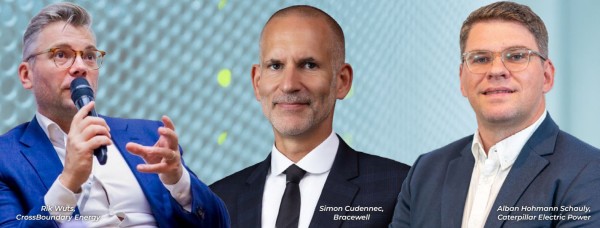
“Ensuring reliable power for data centres remains one of the most significant barriers to sector growth,” says Simon Cudennec, Partner at Bracewell.
Across many African countries, national grids are plagued by outages, limited capacity, and uneven coverage. Operators often have no choice but to rely on diesel generators, sometimes as primary supply, which introduces cost volatility and undermines sustainability goals.
Cobus Van Schalkwyk, Managing Director of Rolls-Royce Solutions Africa, emphasises that grid instability isn’t a minor inconvenience, but an operational risk: “globally, data centres’ biggest vulnerability is power interruption, and in Africa, outages are a fact of life.”
With demand projected to soar from roughly 300–450MW today to over 1,200MW by 2030, operators must plan meticulously for resilience.
Rik Wuts, Head of Telecom Solutions at CrossBoundary Energy, explains why the stakes are so high: “Tier III and IV facilities require up to 99.995% uptime, which equates to just 26 minutes of allowable downtime per year. No national grid in Africa can satisfy that on its own.”
For Wuts, the solution lies in innovative energy strategies that go beyond the grid, blending multiple energy sources to ensure constant supply.
Urbanisation and population growth add urgency. Alban Hohmann Schauly, Data Centre Segment Manager - Africa & Middle East at Caterpillar Electric Power, notes that nearly 600 million Africans still lack reliable electricity. For data centre operators, this translates into a patchwork of power quality and availability, complicating long-term planning.
“Additionally, the expansion of the power infrastructure has been a challenge throughout much of Africa even without the energy requirements of data centres. While the adoption of lower carbon-intensive technologies like solar and wind offers great promise, it will take some time for capacity to meet the growing appetite for energy,” explains Schauly.
Renewable energy is increasingly central to solving Africa’s data centre power dilemma.
“Integration of solar, wind, and battery storage into hybrid models is gaining traction,” Cudennec observes. Power purchase agreements (PPAs) allow operators to secure predictable renewable supply, reducing reliance on fossil fuels. Where regulatory frameworks permit, energy from off-site renewable plants can be wheeled directly to data centres.
Van Schalkwyk emphasises that hybrid solutions are practical and necessary: “solar and batteries offer green potential, but reliability demands hybrid setups — grid, renewables, and modern gensets coordinated by smart Energy Management Systems.”
Hydrotreated Vegetable Oil (HVO) and biogas can further cut emissions without overhauling existing diesel infrastructure, although supply remains limited in Africa.
Kathleen Jean-Pierre, Chief Operating Officer at CrossBoundary Energy, notes that “hybrid generation with battery energy storage can be custom-configured to meet each data centre’s needs. Wheeling frameworks allow off-site renewables to feed facilities, which is already happening in markets such as South Africa, Kenya, and Nigeria.”
Falling battery costs are making fully dispatchable, 24/7 renewable power increasingly viable, even in regions with historically unreliable grids.
Schauly points out that modular solutions such as mobile batteries help operators maximise renewable usage, smooth peak demand, and stabilise local grids while ensuring resilience and scalability.
“Battery energy storage solutions can also be beneficial in expanding the use of renewable energy sources,” adds Schauly.
As Tomi Ola, Maximum Demand Key Account Management, Ikeja Electric PLC, notes, “a potential solution is to site data centres in less populated areas with ample space for renewable energy integration, thereby reducing energy costs.”
Such locations can also leverage natural water bodies for cooling, circulating water through closed-loop systems that absorb server heat before returning to source — a natural pairing of sustainability and practicality.
Reducing energy consumption is as crucial as diversifying sources. Simon Cudennec observes that African data centres are adopting advanced cooling systems, predictive maintenance, and AI-driven energy management platforms to reduce operational costs while remaining competitive for international tenants.
Wuts adds that innovation in cooling and load management could have a major impact: “temperature control is challenging in Africa, so AI-powered load reduction or immersion cooling could be game-changing.”
Renewable energy, particularly solar and wind, represents the fastest route to meet increasing electricity demand. Hybrid strategies also optimise costs. Van Schalkwyk explains that smart orchestration of diesel or gas generators, batteries, and renewable sources can significantly improve efficiency and resilience. As Africa’s data centre capacity grows at 12–13% annually, hybrid energy strategies are critical for cost-effective, sustainable operations.
Alban Hohmann Schauly stresses the importance of control systems that integrate multiple assets — generator sets, battery storage, and renewables — into a single platform, enabling reliable, efficient, and scalable energy management.
Unstable grids are more than an inconvenience: they shape where and how data centres can grow.
“Unreliable supply forces operators to invest heavily in self-generated power, raising capital costs and deterring investment,” notes Cudennec.
Strategic site selection increasingly prioritises proximity to robust transmission infrastructure or renewable energy generation sites to mitigate exposure to grid weaknesses. Bridging power solutions provide temporary relief while grids are upgraded.
According to Schauly, “reliable bridge power solutions are critical for expediting revenue and enhancing the resilience of mission-critical developments. Bridge power fills the gap between the actual current power needs of a data centre and the timeframe when utility-supplied electricity becomes available.”
However, bridging power solutions can vary greatly in complexity and installation time, consisting of turbines, natural gas generator sets, diesel generator sets, and battery energy storage systems (BESS). They can be set up in weeks and remain in place for days, weeks, months or even years.
“Diesel generator sets are generally favoured for their quick availability and ease of mobilisation, but natural-gas-fuelled reciprocating generator sets are highly effective in distributed generation applications by offering reliable power supply, easy maintenance and low life-cycle costs,” adds Schauly.
However, it’s not just about availability; power quality is another critical factor.
“It’s important to underline the importance of power quality for data centres. Voltage flicker, frequency variation, and even brief power interruptions can damage hardware,” reports Sumeet Ramandh, Project Development Director at CrossBoundary Energy. “The average number of power interruptions per customer per year reported by South Africa’s Eskom is 11.7, Senegal’s SENELEC is 16, and Kenya’s KPLC is 45. The average for US utilities is 1.5. Data centre operators in Africa are therefore compelled to invest in their own power conditioning equipment to compensate.”
Across the continent, innovative projects illustrate what is possible.
“Several projects across the continent illustrate how innovative energy models can address power supply challenges,” shares Cudennec. “In South Africa, Africa Data Centres recently entered into a 20-year PPA with Distributed Power Africa and EDF for a 12 MW solar facility, enabling it to offset nearly a third of its national energy requirements with clean power. Similarly, Teraco has signed long-term agreements to source both solar and wind power, ensuring a round-the-clock renewable supply for its facilities.”
In Ghana, Onix Data Centre has combined Tier IV infrastructure with on-site solar generation and precision cooling systems to ensure resilience in a challenging power environment. Raxio’s facilities in Uganda and Angola have implemented advanced energy-efficient systems to optimise performance and reduce environmental impact.
“The Microsoft-KenGen partnership in Kenya showcases the potential of using an already renewable-rich grid to power energy-intensive AI workloads. And Teraco in South Africa continues to push the envelope on viability of large-scale wheeling agreements,” adds Wuts. “But this is a nascent space, so the most exciting advancements are yet to come!”
“These case studies illustrate a consistent trend: with the right combination of technology, contractual structuring, and regulatory support, African data centres can achieve both operational resilience and measurable sustainability outcomes,” asserts Cudennec.
Tomi Ola of Ikeja Electric PLC highlights the fundamental paradox: “does the development of data centres spur energy efficiency, or does reliable energy drive data centre expansion?
The answer is both. Until grid infrastructure improves across the continent, energy availability will continue to dictate where and how data centres grow, while the expansion of digital infrastructure incentivises investment in smarter, cleaner, and more reliable power systems.
Africa’s data centre future will rely on hybrid solutions, renewable integration, and close collaboration between operators and governments. Done right, the continent can support a burgeoning digital economy while leapfrogging traditional energy models — creating a greener, more resilient foundation for growth.