


14 November 2025

Selecting the right batteries for Africa’s data centres involves understanding application-specific needs, local energy infrastructure, and sustainability considerations.
Lead acid batteries, especially advanced TPPL technology, remain popular due to their safety, reliability, and familiarity within the region. Power outages and unreliable grids, notably in South Africa, make dependable backup solutions essential to avoid costly downtime. Effective system management — proper specification, installation, and maintenance — plays a key role in maximising battery performance and lifespan. Reliability takes precedence over lifespan, as data centres require unwavering assurance that batteries will perform during outages.
Increasingly, real-time monitoring of battery parameters is being adopted to proactively address potential issues. As the African data centre market continues to grow, informed choices about battery technology will be critical to ensuring safe, resilient, and sustainable power solutions.
Data centre batteries are far from being created equally, exhibiting significant variation, particularly in their chemistry and suitability for different applications.
Across Africa, lead acid batteries remain a popular choice among customers. This preference is largely attributed to the existing workforce being well-trained in the sizing, installation, and maintenance of these batteries. Furthermore, lead acid batteries are compatible with more established safety systems, whereas other battery chemistries might necessitate data centres updating existing systems or even implementing entirely new ones. The selection of a battery also heavily depends on the specific application and requires careful consideration of factors such as required backup time, rate of discharge, ambient climate, local infrastructure, and even national energy policies, among other elements.
Selecting the right batteries for Africa’s data centres begins with understanding application-specific requirements. Some data centres may only need a brief 5-10 minutes of battery backup, just enough time for a generator to start. However, others might require 30 minutes or more of full-load support, powering both critical and non-critical systems during outages.
Beyond application needs, selecting the right batteries also necessitates considering local energy policies and infrastructure. These are critical factors, especially in regions like South Africa, which has faced recurring power challenges since late 2007, with loadshedding resuming in January 2024 after a brief period of stability. Given that data centres require continuous power, downtime during planned grid outages is not an option. Therefore, South African data centres must take this into account when selecting batteries. The ongoing energy crisis has even prompted the South African government’s Department of Communications and Digital Technologies (DCDT) to call for data centres to reduce their reliance on the grid.
Sustainability is also an increasingly important priority. According to Battery Council International (BCI), lead acid batteries offer a nearly 100% recyclability rate. Across the African continent, meeting battery-related sustainability targets is no longer optional. New regulations in markets like Nigeria are now enforcing standards across a battery’s entire lifecycle, from production through to disposal.
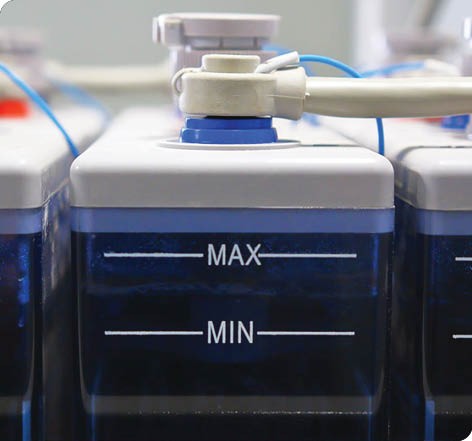
Making the most of your battery hinges on effective training and proper system management. Performance can be maximised across three key stages.
Firstly, correct specification of the battery for the application delivers better long-term ROI. Secondly, during installation and commissioning, factors like temperature, ventilation, and storage conditions must be managed properly to avoid issues such as premature self-discharge. Finally, during operation and maintenance, avoiding regular deep discharges, monitoring charge/discharge rates, and maintaining accurate records all contribute to extending battery life and improving reliability.
It’s crucial to remember that batteries are just one component of a broader system. Full system testing is always recommended to ensure reliability under real-world conditions.
Based on our experience, lead acid batteries, particularly advanced thin plate pure lead (TPPL) technology, continue to lead the pack for African data centre applications. This is due to their safety, reliability, and compatibility with high-discharge demands. They are also a more established technology in the data centre environment, making integration and configuration simpler compared to alternative chemistries.
Many African data centres require batteries capable of handling high power needs in the event of an outage, and TPPL excels in this regard. While the market is evolving, we anticipate these trends – the use of lead acid and high-discharge requirements – to remain prominent for the foreseeable future. Nevertheless, data centre operators should always stay informed about technology shifts and regulatory changes that could influence future battery selection.
While battery life expectancy is important in the African data centre market, reliability is the paramount priority.
During a power outage, data centres must have complete trust in their batteries to work without fail. In this context, a reliable battery with a shorter lifespan is significantly more valuable than a long-life battery that might fail when needed. Downtime is costly; the Uptime Institute reported that the most severe outages in 2023 exceeded $1 million in losses. In regions with unreliable power supply, such as parts of Africa, reliability is not merely preferred – it is essential.
Another increasingly important factor is battery monitoring. Many of our clients now request real-time data on key battery parameters, including charge/discharge rates, temperature, and energy throughput. This visibility empowers operators to proactively identify and resolve issues before they escalate into costly failures.
As Africa’s data centre market continues its growth trajectory, battery selection will remain central to performance, safety, and sustainability.