10 March 2026

Daniel Orelowitz, MD at Training Force
South Africa’s long-term economic competitiveness depends on how effectively it embraces digital transformation.
Across the globe, industries are rapidly integrating Artificial Intelligence (AI) and automation into their operations, with technology changing how people work, how decisions are made, and how businesses compete. For South Africa, the challenge is not only technological adoption, but workforce readiness. Without a deliberate national effort to build digital capability, the gap between technology and people will continue to grow. This gap threatens productivity, innovation, and ultimately, economic growth, and it is reaching a critical point. In a global economy moving at digital speed, failing to adapt is not an option.
Find out more03 March 2026

Nishandra Baijnath, Systems Architect, Digital Automation at Schneider Electric
Utilities and municipalities are facing a pivotal challenge as the country’s legacy power grid – engineered for one-way energy delivery from centralised suppliers to end-users – must rapidly evolve to meet a new paradigm.
South Africa’s electrical grid is a classic example of a traditional power system, designed for one-way energy flow. Historically, generation was located close to the fuel source, which saw coal-fired power stations concentrated in Mpumalanga. These stations fed power into high-voltage (HV) yards, which then connected to the national transmission network. This network transported electricity across the country, eventually stepping down the voltage through distribution infrastructure to serve consumers and large power users.
Find out more

03 March 2026

Aslam Tajbhai, Head of Solutions at DMP SA
Today, organisations rely heavily on data as the backbone of their operations. Every business decision, customer interaction, and innovation depends on instant access to accurate information. Unfortunately, many businesses only realise the importance of data protection after experiencing system failures or data loss. In today’s digital landscape, a robust backup strategy is not just advisable, it’s essential for resilience.
The 3-2-1-1 backup model is a proven approach for safeguarding data. It involves maintaining three copies of data, stored across two different types of media, with one copy kept offsite in an immutable state. This method enhances data durability and speeds up recovery, especially as immutable backups remain unaltered even when security systems are compromised. With cyber threats and ransomware attacks increasing, such protective measures are vital for organisational survival.
Find out more27 February 2026
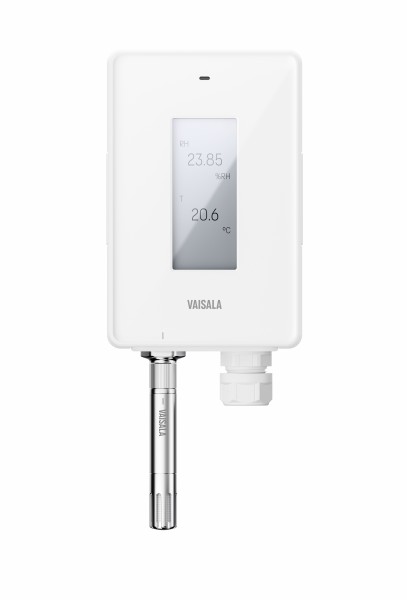
Approximately 80% of the world’s data centers still rely on air cooling, and even a small temperature measurement error of just 0.5°C can lead to significant energy waste—potentially over $800 million annually in a 10 MW data center, totaling about $8 billion over ten years. Accurate, stable environmental measurement is crucial for optimizing cooling efficiency and reducing energy costs.
Vaisala introduces Origo, a next-generation modular measurement platform designed to deliver ±0.1°C temperature and ±1% RH humidity accuracy. Its precise measurements help prevent overcooling, lowering energy waste while ensuring reliable environmental control—vital for data centers, life science cleanrooms, and other critical facilities.
Find out more