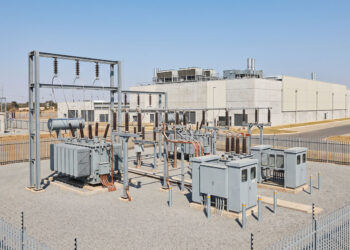
In response to the needs of an off-site manufacturer’s data centre in Africa, which is currently in the design phase, Engineering Power Solutions (EPS) undertook a comprehensive protection and arc flash study.
By conducting extensive power system analyses across both Medium Voltage (MV) and Low Voltage (LV) networks, EPS provided critical insights and recommendations to optimise system performance and personnel safety.
Future-proof electrical infrastructure
EPS’s electrical engineering team worked to optimise the client’s data centre power infrastructure, ensuring compliance with the highest industry standards.
EPS performed detailed calculations to assess the maximum load flow across the network, ensuring voltage stability and balanced power distribution. The analysis determined both the maximum and minimum initial symmetrical fault levels and asymmetrical peak fault levels, following the IEC 60909 standard. Overcurrent and earth fault protection coordination were also optimised to enhance system reliability. Differential protection settings were calculated to ensure precise fault detection and rapid fault clearance. In addition, arc flash energy levels were assessed based on the IEEE 1584 standard, with enhanced protection settings recommended to mitigate risks.

To execute these in-depth studies, EPS utilised state-of-the-art ETAP 22.5.0 software, delivering highly accurate simulations and insights into system performance. This advanced analytical approach enabled the client to gain a thorough understanding of their electrical infrastructure while ensuring compliance with stringent regulatory and safety requirements.
Analysis & studies
The primary objective of the load flow analysis was to verify that voltage levels remained within regulatory tolerances while ensuring electrical equipment could operate efficiently without the risk of overloading. EPS engineers assessed total busbar and branch loading, transformer loading, as well as generator and UPS performance across multiple configuration scenarios. The results confirmed that voltage levels throughout the facility adhered to regulatory tolerances of +6% and -10%, while transformer capacity was deemed sufficient to support the facility’s operational demands without overloading.
EPS conducted a short circuit analysis to determine the magnitude of short circuit currents at various points in the power system. The study compared these values against equipment ratings to ensure that circuit breakers and protective devices were capable of withstanding fault currents. Findings confirmed that short circuit currents in both the MV and LV systems remained within safe operating limits, ensuring that the facility’s electrical infrastructure could effectively manage fault conditions without compromising system integrity.
EPS carried out an arc flash study to assess incident energy levels and establish appropriate protective measures. The study identified a worst-case incident energy level of 39.75 Cal/cm², attributed to high fault current levels and a low disconnection time of 0.8 seconds. In compliance with NFPA 70E guidelines, EPS recommended the implementation of advanced protection settings to reduce arc flash energy levels while outlining necessary Personal Protective Equipment (PPE) requirements for personnel.
According to NFPA 70E standards, personnel operating within the affected zones would be required to wear arc-rated protective clothing with an arc rating equal to or greater than the estimated incident energy. Additional safety measures included arc flash suits, long-sleeve protective garments, arc-rated gloves, insulated footwear, hard hats, safety goggles, and hearing protection to minimize the risk of severe burns in the event of an arc flash incident. Equipment labelling recommendations were also provided to improve on-site safety protocols.
To ensure efficient fault isolation and prevent unnecessary shutdowns, EPS meticulously analysed protection relay settings, fine-tuning them for optimal system grading and coordination. Detailed Time-Current Characteristic (TCC) curves were generated to illustrate the selective fault clearance strategy across the power network. This approach allowed for precise fault detection while maintaining operational stability and minimizing disruptions to critical data centre functions.
Delivering a reliable, compliant, and scalable power system
The findings of EPS’s study confirmed that the data centre’s electrical infrastructure complied with regulatory limits for voltage tolerances and equipment loading. The analysis further demonstrated that both the MV and LV systems were capable of safely managing fault conditions, ensuring long-term operational safety. With comprehensive arc flash hazard assessments and enhanced protection coordination, EPS successfully outlined personnel safety measures tailored to the facility’s unique electrical environment.
Additionally, EPS provided a detailed Protection Coordination Report highlighting potential coordination issues, recommended protection upgrades, and future considerations for ongoing maintenance.